Forget New Models — The Real AI Race Is Infrastructure
Published Jan 4, 2026
If your teams still treat AI as experiments, two weeks of industry moves (late Dec 2024) show that's no longer enough: vendors shifted from line‐level autocomplete to agentic, multi‐file coding pilots (Sourcegraph 12‐23; Continue.dev 12‐27; GitHub Copilot Workspace private preview announced 12‐20), Qualcomm, Apple patent filings, and Meta each published on‐device LLM roadmaps (12‐22–12‐26), and quantum, biotech, healthcare, fintech, and platform teams all emphasized production metrics and infrastructure over novel models. What you get: a clear signal that the frontier is operationalization—platformized LLM gateways, observability, governance, on‐device/cloud tradeoffs, logical‐qubit KPIs, and integrated drug‐discovery and clinical imaging pipelines (NHS: 100+ hospitals, 12‐23). Immediate next steps: treat AI as a shared service with controls and telemetry, pilot agentic workflows with human‐in‐the‐loop safety, and align architectures to on‐device constraints and regulatory paths.
From Copilots to Pipelines: AI Enters Professional Infrastructure
Published Jan 4, 2026
Tired of copilots that only autocomplete? In the two weeks from 2024‐12‐22 to 2025‐01‐04 the market moved: GitHub Copilot Workspace (public preview, rolling since 2024‐12‐17) and Sourcegraph Cody 1.0 pushed agentic, repo‐scale edits and plan‐execute‐verify loops; Qualcomm, Apple, and mobile LLaMA work targeted sub‐10B on‐device latency; IBM, Quantinuum, and PsiQuantum updated roadmaps toward logical qubits (late‐December updates); DeepMind’s AlphaFold 3 tooling and OpenFold patched production workflows; Epic/Nuance DAX Copilot and Mayo Clinic posted deployments reducing documentation time; exchanges and FINRA updated AI surveillance work; LangSmith, Arize Phoenix and APM vendors expanded LLM observability; and hiring data flagged platform‐engineering demand. Why it matters: AI is being embedded into operations, so expect impacts on code review, test coverage, privacy architecture, auditability, and staffing. Immediate takeaway: prioritize observability, audit logs, on‐device‐first designs, and platform engineering around AI services.
From Models to Middleware: AI Embeds Into Enterprise Workflows
Published Jan 4, 2026
Drowning in pilot projects and vendor demos? Over late 2024–Jan 2025, major vendors moved from single “copilots” to production-ready, orchestrated AI in enterprise stacks—and here’s what you’ll get: Microsoft and Google updated agent docs and samples to favor multi-step workflows, function/tool calling, and enterprise guardrails; Qualcomm and Arm pushed concrete silicon, SDKs and drivers (Snapdragon X Elite targeting NPUs above 40 TOPS INT8) to run models on-device; DeepMind’s AlphaFold 3 and open protein models integrated into drug‐discovery pipelines; Epic/Microsoft and Google Health rolled generative documentation pilots into EHRs with time savings; Nasdaq and vendors deployed LLMs for surveillance and research; GitHub/GitLab embedded AI into SDLC; IBM and Microsoft focused quantum roadmaps on logical qubits. Bottom line: the leverage is systems and workflow design—build safe tools, observability, and platform controls, not just pick models.

AI Moves Into the Control Loop: From Agents to On-Device LLMs
Published Jan 4, 2026
Worried AI is still just hype? December’s releases show it’s becoming operational—and this summary gives you the essentials and immediate priorities. On 2024-12-19 Microsoft Research published AutoDev, an open-source framework for repo- and org-level multi-agent coding with tool integrations and human review at the PR boundary. The same day Qualcomm demoed a 700M LLM on Snapdragon 8 Elite at ~20 tokens/s and ~0.6–0.7s first-token latency at <5W. Mayo Clinic (2024-12-23) found LLM-assisted notes cut documentation time 25–40% with no significant rise in critical errors. Bayer/Tsinghua reported toxicity-prediction gains (3–7pp AUC) and potential 20–30% fewer screens. CME, GitHub, FedNow (800+ participants, +60% daily volume) and Quantinuum/Microsoft (logical error rates 10–100× lower) all show AI moving into risk, security, payments, and fault-tolerant stacks. Action: prioritize integration, validation, and human-in-loop controls.

AI Embedded: On‐Device Assistants, Agentic Workflows, and Industry Impact
Published Jan 4, 2026
Worried AI is still just a research toy? Here’s a two‐week briefing so you know what to do next. Major vendors pushed AI into devices and workflows: Apple (Dec 16) rolled out on‐device models in iOS 18.2 betas, Google tightened Gemini into Android and Workspace (Dec 18–20), and OpenAI tuned GPT‐4o mini and tool calls for low‐latency apps (Dec). Teams are building agentic SDLCs—PDCVR loops surfaced on Reddit (Jan 3) and GitHub reports AI suggestions accepted in over 30% of edits on some repos. In biotech, AI‐designed drugs hit Phase II (Insilico, Dec 19) and Exscientia cited faster cycles (Dec 17); in vivo editing groups set 2026 human data targets. Payments and markets saw FedNow adoption by hundreds of banks (Dec 23) and exchanges pushing low‐latency feeds. Immediate implications: adopt hybrid on‐device/cloud models, formalize agent guardrails, update procurement for memory‐safe tech, and prioritize reliability for real‐time rails.
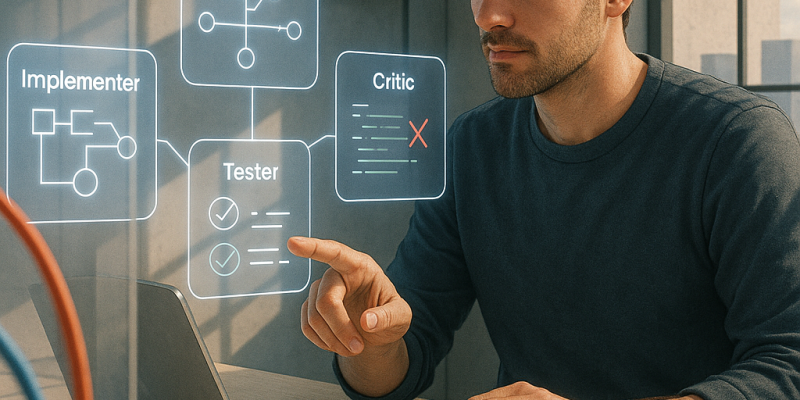
Agentic AI Is Taking Over Engineering: From Code to Incidents and Databases
Published Jan 4, 2026
If messy backfills, one-off prod fixes, and overflowing tickets keep you up, here’s what changed in the last two weeks and what to do next. Vendors and OSS shipped agentic, multi-agent coding features late Dec (Anthropic 2025-12-23; Cursor, Windsurf; AutoGen 0.4 on 2025-12-22; LangGraph 0.2 on 2025-12-21) so LLMs can plan, implement, test, and iterate across repos. On-device moves accelerated (Apple Private Cloud Compute update 2025-12-26; Qualcomm/MediaTek benchmarks mid‐Dec), making private, low-latency assistants practical. Data and migration tooling added LLM helpers (Snowflake Dynamic Tables 2025-12-23; Databricks Delta Live Tables 2025-12-21) but expect humans to own a PDCVR loop (Plan, Do, Check, Verify, Rollback). Database change management and just‐in‐time audited access got product updates (PlanetScale/Neon, Liquibase, Flyway, Teleport, StrongDM in Dec). Action: adopt agentic workflows cautiously, run AI drafts through your PDCVR and PR/audit gates, and prioritize on‐device options for sensitive code.

From Copilot to Co‐Worker: Building an Agentic AI Operating Model
Published Jan 3, 2026
Are you watching engineering time leak into scope creep and late integrations? New practitioner posts (Reddit, Jan 2–3, 2026) show agentic AI is moving from demos to an operating model you can deploy: Plan–Do–Check–Verify–Retrospect (PDCVR) loops run with Claude Code + GLM‐4.7 and open‐source prompt and sub‐agent templates (GitHub, Jan 3, 2026). Folder‐level priors plus a prompt‐rewriting meta‐agent cut typical 1–2 day fixes from ~8 hours to ~2–3 hours. DevScribe‐style executable workspaces, data‐backfill platforms, and agents that audit coordination and alignment tax complete the stack for regulated domains like fintech and digital‐health‐ai. The takeaway: it’s no longer whether to use AI, but how to architect PDCVR, meta‐agents, folder policies, and verification workspaces into your operating model.

How AI Became Engineering Infrastructure: PDCVR, Agents, Executable Workspaces
Published Jan 3, 2026
Drowning in rework, missed dependencies, and slow releases? Read this and you’ll get the concrete engineering patterns turning AI from a feature into infrastructure. Over 2026‐01‐02–03 threads and docs, teams described a Plan–Do–Check–Verify–Retrospect (PDCVR) loop (on Claude Code and GLM‐4.7) that makes AI code changes auditable; multi‐level agents with folder‐level priors plus a prompt‐rewriting meta‐agent that cut typical 1–2 day tasks to ~2–3 hours (a 3–4× speedup); DevScribe‐style executable workspaces for code, DBs, and APIs; platformized, idempotent data backfills; tooling to measure the “alignment tax”; and AI todo routers that unify Slack, Jira, and Sentry. If you run critical systems (finance, health, trading), start adopting disciplined loops, folder priors, and observable migration primitives—mastering these patterns matters as much as picking a model.

How AI Became Your Colleague: The New AI-Native Engineering Playbook
Published Jan 3, 2026
If your teams are losing days to rework, pay attention: over Jan 2–3, 2026 engineers shared concrete practices that make AI a predictable, auditable colleague. You get a compact playbook: PDCVR (Plan–Do–Check–Verify–Retrospect) for Claude Code and GLM‐4.7—plan with RED→GREEN TDD, have the model write failing tests and iterate, run completeness checks, use Claude Code sub‐agents to run builds/tests, and log lessons (GitHub templates published 2026‐01‐03). Paired with folder‐level specs and a prompt‐rewriting meta‐agent, 1–2 day tasks fell from ~8 hours to ~2–3 hours (20‐min prompt + a few 10–15 min loops + ~1 hour testing) (Reddit, 2026‐01‐02). DevScribe‐style executable, offline workspaces, reusable migration/backfill frameworks, alignment‐monitoring agents, and AI “todo routers” complete the stack. Bottom line: adopt PDCVR, agent hierarchies, and executable workspaces to cut cycle time and make AI collaboration auditable—and start by piloting these patterns in safety‐sensitive flows.

How AI Is Rewiring Software Engineering: PDCVR, Agents, Executable Workspaces
Published Jan 3, 2026
What if a typical 1–2 day engineering task drops from ~8 hours to ~2–3 hours? In the last two weeks practitioners (Reddit threads dated Jan 2–3, 2026) showed how: an AI‐native SDLC loop called PDCVR (Plan‐Do‐Check‐Verify‐Retrospect) built on Claude Code and GLM‐4.7, folder‐level priors plus a prompt‐rewriting meta‐agent, executable workspaces like DevScribe, repeatable data‐migration/backfill patterns, and tools to surface the “alignment tax.” PDCVR forces repo scans, TDD plans, small diffs, sub‐agents (open‐sourced in .claude on GitHub, Jan 3, 2026) to run builds/tests, and LLM retrospectives. Measured gains: common fixes go from ~8 hours to ~2–3 hours with 20‐minute prompts and short PR loops. Bottom line: teams in fintech, healthtech, trading and regulated sectors should adopt these operating models—PDCVR, multi‐level agents, executable docs, migration frameworks—and tie them to speed, quality, and risk metrics.